Your operation needs consistent cleaning schedules customized for specific risks, daily throughput, allergen management, and inspection schedules, including auditable records confirming food safety measures, inspection compliance, and health department standards. The details below provide details about essential cleaning protocols.
Essential Summary
- Brampton sanitation experts support restaurants, grocery departments, commissaries, warehouses, bakeries, schools, mobile vendors, and allergen-sensitive operations.
- They sanitize high-touch surfaces, food-contact equipment, kitchens, floors, drains, restrooms, and storage areas using compartmentalized approaches to eliminate cross-contamination.
- Confirmation of approved sanitizer dilution, compatibility, and contact time is completed by approved specialists, with conclusion filed using swabs, assessments, and remedial documentation.
- Hazard, throughput, transitions, spills, and guidelines should inform cleaning calendars, with routine, regular, and cyclical tasks assigned by location.
- Prioritize vendors displaying HACCP, sanitation knowledge, safety training education, liability, credentials, color-coded tools, and assessment-ready cleaning records.
What Brampton Venues Require Food Safety Cleaning?
You must follow food safety cleaning if your establishment is falls under public health review, food regulations, or HACCP systems. This covers restaurants, cafeterias, commissaries, grocery food departments, butcher shops, seafood counters, convenience stores, and institutional kitchens.
Adherent sanitation standards proves needed in distribution centers, manufacturing facilities, cold storage areas, bakery retailers, educational meal programs, banquet venues, and meal delivery services. Portable temporary ventures count too, such as catering vehicles, festival vendors, and pop-up establishments. Your establishment needs documented cleaning protocols whenever your employees handle raw materials, divide prepared dishes, warm meals, or keep allergens stored. In Brampton, cleanliness is not discretionary; it represents legal, operational, and consumer protection compliance.
What Services Do Brampton Cleaning Experts Provide?
You require experienced cleaning professionals who disinfect high-touch surfaces, cooking areas, flooring, and restroom facilities to maintain food safety and public health requirements. These locations are prioritized due to their high cross-contamination potential, slip and fall dangers, and health code violations.
By knowing exactly what gets cleaned, you are able to confirm your operation's sanitation protocols meet compliance standards.
Sanitizing High-Touch Areas
arrange sanitization schedules considering foot traffic, environmental hazards, and business activities.
check that sterilization was successful and enable remedial steps when results come outside target ranges
Cooking Zones, Walking Surfaces, and Restroom Environments
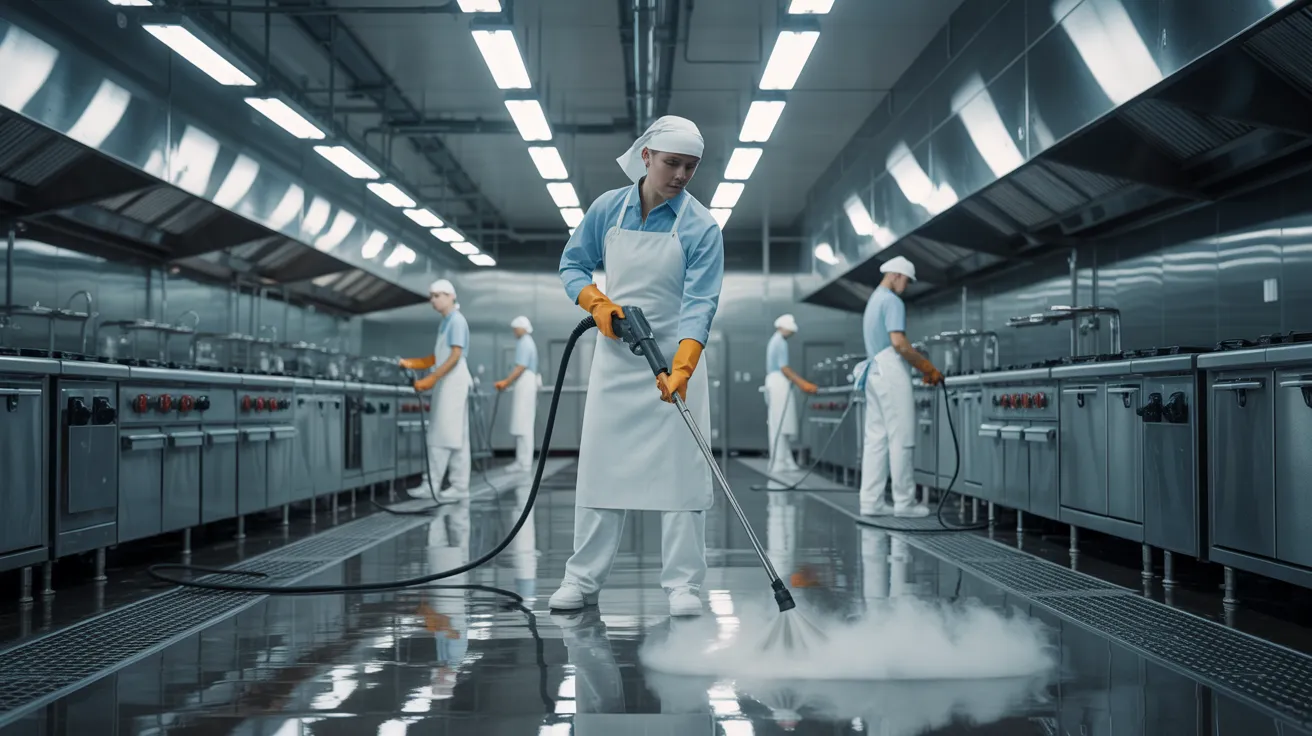
Professional cleaners in Brampton prioritize kitchens, floors, and restrooms given that each location involves specific contamination control, slip-and-fall, and health code requirements. In industrial kitchens, you need grease removal from cooking stations, appliance surfaces, drain systems, preparation areas, and backsplashes to reduce contamination and pest pressure.
Documented floor care is likewise provided as part of the service.
Restroom sanitation involves disinfecting touchpoints, fixtures, partitions, dispensers, and waste containers, replenishing amenities and managing odor. They also maintain restaurant cleaning supply rooms where product storage, sink cleanliness, and drain systems impact daily sanitation standards and worker protection.
The Importance of Food Safety Cleaning in Brampton
In Brampton, you must maintain sanitary cleaning practices to meet health code requirements and achieve compliance. You also minimize bacterial spread through proper cleaning of food-preparation surfaces, appliances, and frequently-touched items. Most importantly, you help protect community wellness by reducing the chance of food poisoning in your establishment.
Sanitary Standards Adherence
Since Brampton food companies must follow strict public health standards, your cleaning procedures directly impacts your ability to meet health codes, defend diners, and eliminate regulatory penalties. You must maintain clean food preparation areas, verifiable cleaning logs, correct sanitizer application, and auditable operational standards that align with municipal and provincial inspection expectations.
During inspections of your operation, regulators check if your sanitation system ensures secure product handling, equipment sanitation, garbage disposal, and bathroom upkeep.
Cross-Contamination Prevention
Following regulatory requirements depends on your ability to prevent cross-contamination in daily food handling and cleaning. You should isolate raw items from prepared foods, sanitize prep surfaces between tasks, and store chemicals away from food-contact items. Clear procedures reduce transfer risks and promote steady regulatory adherence.
You should establish allergen separation to prevent major allergens from touching common work areas, storage bins, or tools. Employ separate boards, labeled implements, and strict utensil labeling so staff don't mix items throughout cooking or serving. Mandate washing hands following raw meat, seafood, eggs, or allergen-containing products. Change cleaning rags frequently, and check disinfectant potency using test kits. When staff members receive training on these procedures every shift, you build a more hygienic, secure workplace that meets Brampton's food safety expectations daily.
Public Wellness Defense
When sanitation protocols breaks down, you don't just risk a failed inspection—you heighten the likelihood of foodborne illness impacting customers, staff, and the wider Brampton community. You also undermine your responsibility in safeguarding community wellness, especially in busy food facilities where contamination can spread quickly through surfaces, equipment, and touchpoints.
You need cleaning protocols that eliminate soils, disinfect appropriately, and validate outcomes. This requires following exposure durations, selecting approved disinfectants, logging schedules, and educating staff to meet regulatory requirements. These measures prevent illness spread by minimizing pathogens before reaching surfaces or food. Throughout Brampton, strong cleaning protects vulnerable communities, minimizes disease potential, and proves your diligence. When you follow proper protocols, you go beyond requirements—you lower hazards and enable safer food service throughout the area.
In What Ways Does Cleaning Help Achieve Food Safety Compliance?
Maintaining thorough cleaning protocols ensures food safety compliance by minimizing contamination hazards, relevant resource preventing pathogen multiplication, and keeping your facility in accordance with sanitation requirements under HACCP-based programs and public health regulations. You verify that product-contact areas stay visibly clean and microbiologically controlled, enabling documented preventive controls and inspection readiness.
Systematic cleaning also solidifies allergen management by removing residues that can provoke undeclared allergen exposure. When you combine established sanitation practices with safety training, your staff can implement standardized methods, employ approved chemicals correctly, update records thoroughly, and respond to deviations before escalation occurs. Regular cleaning supports supply chain documentation, validates corrective steps, and shows due diligence when audited. Furthermore, it aids you maintain product safety, preserve compliance standards, and minimize the risk of regulatory actions, recalls, complaints, and avoidable health dangers.
Establishing When to Arrange Commercial Cleaning
Plans for cleaning work most effectively when created based on risk factors, production capacity, and regulatory needs instead of just a fixed calendar.
Plan your periodic tasks from standard cleaning
Finding Quality Brampton Cleaning Experts: A Guide
Begin by evaluating providers based on sanitation compliance standards—not solely on budget. You should confirm that each organization comprehends CFIA, public health, and HACCP-based requirements applicable to your facility. Request insurance certificates, WHMIS compliance, staff training documentation, and oversight procedures. Assess whether technicians recognize cross-contamination risks, chemical handling protocols, and verifiable sanitation records.
You should also assess business dependability and responsibility. Request references from food facilities in Brampton, then examine turnaround periods, corrective actions, and communication standards. Confirm the company supports supplier audits and can present inspection-ready documentation when regulators or third parties request evidence. Check whether equipment maintenance is performed, color-coded implements are used appropriately, and facility-specific risks are recognized. A competent service protects regulatory adherence, product integrity, and your brand reputation.
What aspects should a Food Safety Cleaning Plan include?
Put together a written plan that clarifies every sanitation duty, standard, and accountability ahead of production commencement. You should list cleaning frequencies, approved chemicals, dilution rates, contact times, tools, and verification methods for each zone, surface, and piece of equipment. Make sure to include pre-operational inspections, corrective actions, and employee training requirements.
Your program should also cover cross-contamination controls, waste handling, pest-prevention measures, and documented schedules for bathrooms, drainage systems, surfaces, and food-preparation zones. Detail how you'll separate raw and ready-to-eat processes, support ingredient tracking, and ensure accurate allergen labeling through validated cleaning between product changes. You should designate accountability, maintain signed records, and compare results against regulatory standards, HACCP controls, and customer requirements. When gaps appear, revise procedures immediately and retrain staff.
Commonly Asked Questions
Do cleaning services operate during nighttime hours at Brampton facilities?
Yes, you can book cleaning services to manage overnight shifts in Brampton facilities. You'll organize overnight sanitation around operational windows, security measures, and staffing requirements. Providers typically establish overnight logistics to reduce disruption, ensure compliance, and document completed tasks. You should verify response times, management, access protocols, and disposal methods before beginning service. If you operate controlled environments, you'll also need documentation that enable audits and compliance verification.
Are emergency spill response solutions provided from sanitation professionals?
Yes, you can expect many Brampton cleaning experts to offer emergency spill response solutions. They handle hazard containment, evaluate dangers, isolate affected areas, and start rapid decontamination to reduce exposure and operational disruption. You should confirm their response times, professional credentials, PPE protocols, and waste management. If your facility must meet health or food safety regulations, select a service that records events, follows compliant sanitation standards, and enables compliance verification.
Do eco-friendly disinfectants work safely on surfaces contacting food?
Absolutely, natural disinfectants prove to be appropriate for surfaces contacting food when you choose solutions certified for food use and regulatory compliant. You must confirm exposure duration, dilution rates, and rinsing needs before use. Plant-derived products reduce chemical hazards, though you should gather proof of efficacy against harmful bacteria. For maintaining residue free surfaces, implement exact manufacturer guidelines and verify your disinfectant complies with food industry regulations.
Can maintenance plans change with seasonal variations?
Certainly, maintenance plans respond to seasonal variations effectively. Adapt frequencies, labor allocation, cleaning agents, and testing procedures to match with operational cycles while maintaining regulatory adherence. Reduce production downtime through scheduling sanitation around production shifts, maximum output, and usage patterns. Additionally modify standard operating procedures, instruction programs, and environmental monitoring to account periodic risks, emerging allergens, or higher contamination levels. Regular reviews ensure the schedule current.
Will professional cleaning services train employees on sanitation best practices?
Absolutely, professional cleaning companies regularly deliver employee education on hygiene standards. Your staff gets training on proper chemical use, dwell times, contamination avoidance, equipment disassembly, and documentation. They typically align instruction with HACCP, GMP, and CFIA or regional health authority requirements. Many also perform sanitation audits to verify compliance, identify gaps, and reinforce corrective actions. This enables you to sustain consistent procedures, clear audits, and reduce food safety risks routinely.
Conclusion
By collaborating with Brampton commercial cleaning and food safety professionals, you aren't simply tidying—you maintain your facility inspection-ready and your standards in compliance. From kitchens to processing floors, every clean surface and organized space decreases contamination and prevents costly issues. By arranging service at appropriate intervals and adhering to a systematic cleaning protocol, you protect staff members, customers, and your standing. In a heavily controlled environment, hygienic conditions are mandatory—they're essential to successful operations.